


NEW Caferacer styles | 2026
July 14, 2026 · Bas van der Wel
Culture · Bikes · 2026
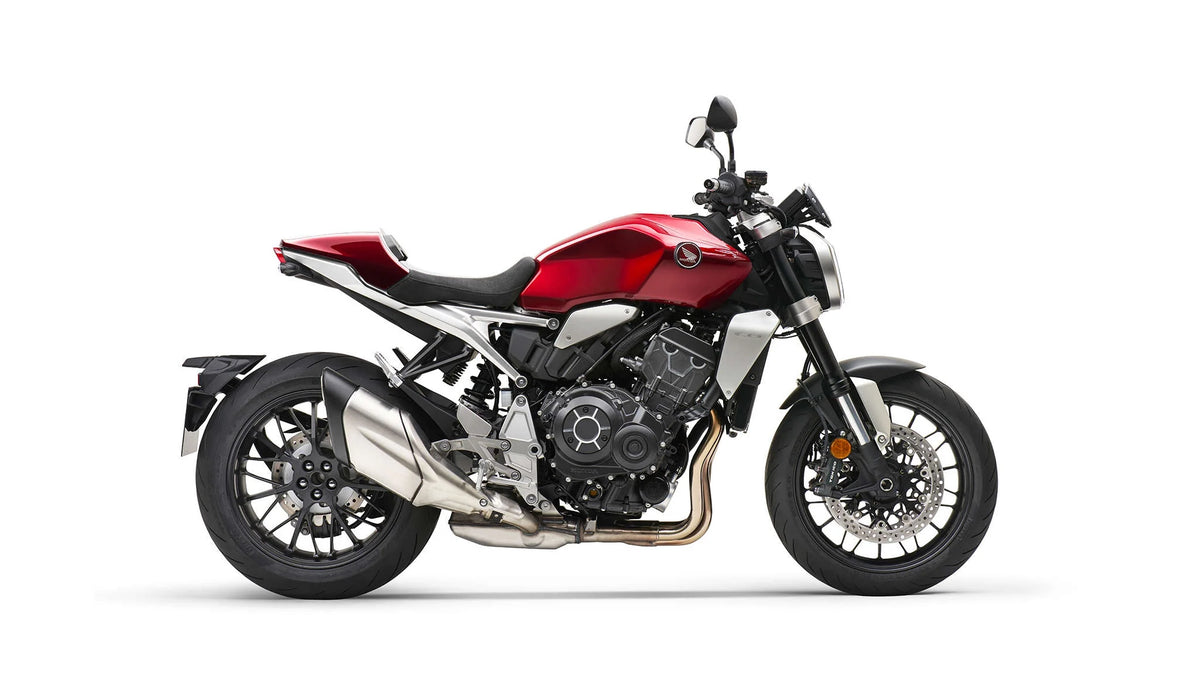
Clip-ons, a hump seat, knees tucked behind the tank, eyes down the road. The cafe racer was never just a bike — it was a posture, an attitude, a way of telling the world you'd rather chase a horizon than commute to one. And somehow, in 2026, that attitude is louder than ever.
The wild part? Today's cafe racer scene isn't a museum. It's split clean down the middle: on one side, manufacturers are pumping out brand-new motorcycles that look like they rolled out of a 1960s Ace Cafe garage. On the other side, riders are taking modern naked bikes — fuel-injected, ABS-equipped, ride-by-wire monsters — and chopping them into one-off custom racers that would make the original Ton-Up Boys spit out their tea.
Let's get into it.
The Factory Cafe Racer Renaissance
Showroom-fresh neo-retro bikes you can ride home today.
For about a decade now, the big manufacturers have figured out that nostalgia sells — but only if you do it right. Slap a round headlight on a sportbike and nobody bites. Build a proper neo-retro from the ground up, and you've got a waiting list.
Here are the modern bikes carrying the cafe racer flame straight off the showroom floor:
Triumph Thruxton RS
If there's a king of the modern cafe racer, this is it. A 1200cc parallel twin that punches like a heavyweight, Brembo M50 calipers, fully adjustable Showa front end, and that low-slung silhouette with clip-ons that actually feel right. Triumph didn't dress up a commuter — they built a cafe racer with proper sporting credentials. It's heavy, it's loud, and it's gorgeous.
BMW R nineT Racer
BMW's boxer twin in cafe racer drag. The Racer version (when you can find one) ships from the factory with full clip-ons, a half-fairing, and a riding position that ranges from "committed" to "ouch." The base R nineT is the more practical canvas, and you'll see a thousand of them turned into bespoke builds — more on that below.
Royal Enfield Continental GT 650
The people's cafe racer. Air-cooled parallel twin, classic tube frame, real clip-ons, and a price tag that doesn't require you to refinance your house. The Continental GT 650 has done more to put new riders on cafe racers than anything since the original Norton Commando. Punches way above its weight.
Husqvarna Vitpilen 701
The minimalist's choice. Husqvarna stripped everything that wasn't essential, then went back and stripped more. A 693cc single, knife-edge styling, and a stance that's more Scandinavian sculpture than motorcycle. Production has been on and off, but the design is going to age like wine.
Moto Guzzi V7 Stone / Special
Not strictly a cafe racer out of the crate, but the transverse V-twin and skinny tank make the V7 the most popular base bike in Italy for cafe conversions. Bolt on bar-end mirrors and a tail hump and you're 80% of the way there.
Honorable mentions: Kawasaki W800 Cafe, Triumph Speed Twin 900, and the freshly revived Norton Commando 961 Cafe Racer — more of an art piece at that price, but undeniably the real thing.
The Custom Scene: Modern Bikes, Old Soul
Today's donor bikes have traction control. That's not a problem — it's the point.
Here's where it gets interesting. The custom cafe racer world used to revolve around tearing down old Hondas and BMWs — the CB750, the airhead R-series, anything with a tube frame and a kickstart. Those donor bikes still exist, but they're getting expensive, rusty, and old. So builders started looking at modern donor bikes instead.
"A new generation of cafe racers with traction control, LED lighting, and parts you can actually still order from a dealer."
Yamaha XSR700 / XSR900
The XSR platform has quietly become the most popular custom base bike of the last five years. Yamaha basically engineered it for it — Yard Built program, easy panel removal, neutral steering geometry. Strip the bodywork, swap in clip-ons, fab a hump seat, and you've got a sub-200kg modern cafe racer with the engine from the MT-07 or MT-09 underneath. Builders love it because it's reliable, light, and donor bikes are cheap secondhand.
Ducati Scrambler
Ducati basically sells the Scrambler as a build platform. The Cafe Racer trim already exists from the factory, but the real magic happens when shops like Deus Ex Machina and Mr. Martini get hold of them. Air-cooled L-twin, trellis frame — it's begging for clip-ons and a single-seat cowl.
Honda CB650R / CB1000R
Honda's "Neo Sports Cafe" line is already 70% of the way there from the factory. The custom community takes that last 30% and turns these into proper modern racers — Öhlins shocks, full Akrapovič systems, custom subframes. The inline-four character with cafe racer ergonomics is a combination the originals never got to enjoy.
BMW R nineT (again)
It earns a mention in both categories. BMW deliberately designed the R nineT to be modified — the subframe unbolts, the tank is steel, the wiring is sensible. Walk into any custom shop in Berlin, Tokyo, or Los Angeles and you'll see at least three R nineT cafe builds in various states of assembly.
The Wildcards: Electric Cafe Racers New
Yes, really. Brands like Maeving (the RM1S out of the UK) and a wave of small-batch builders are now producing electric motorcycles styled as cafe racers. No engine note, no clutch, no gears — but the silhouette is bang on. Whether the purists ever accept them is a separate argument, but they're coming, and some of them look fantastic.
Why Now? The Cafe Racer Revival Explained
Four reasons the scene is exploding right now.
- 1 Riders are tired of plastic. Modern sportbikes are technical marvels, but they all look the same. A cafe racer has personality you can see across a parking lot.
- 2 The aftermarket has caught up. Bolt-on parts for the XSR, R nineT, Scrambler and Triumph platforms are everywhere. You don't need a TIG welder and a lathe to build something cool anymore.
- 3 Mid-displacement is back. 650cc–900cc bikes are perfect for the cafe racer riding style — fast enough to be fun, light enough to be flickable, and not so terrifying you can't enjoy a back road.
- 4 Social media rewards style. A custom cafe racer is more screenshot-able than a 200hp superbike. The look matters more than ever.
Building Your Own: Where to Start
A few hard-earned lessons before you reach for the credit card.
- 01 — Pick the donor bike, not the look. Start with a bike that's mechanically solid and well-supported. The customization comes second.
- 02 — Ergonomics first, aesthetics second. Clip-ons look incredible. They also wreck your wrists on a 200km ride. Test the riding position before you commit.
- 03 — Don't cut the wiring harness unless you know what you're doing. A bad rewire will haunt you forever. Use a plug-and-play sub-harness if possible.
- 04 — Budget double. Whatever you think the build will cost — double it. Cafe racer builds are an exercise in scope creep.
The Bottom Line
The cafe racer didn't survive sixty years by accident. It survived because the shape works, the riding position is honest, and there's something irreducibly cool about a motorcycle stripped down to its essentials. What's changed is that you no longer have to choose between style and reliability. The new factory builds give you both. The modern custom scene gives you both. The barrier to entry has never been lower, and the bikes coming out of garages right now are some of the best the cafe racer world has ever seen.
The Ton-Up Boys would approve. They might not understand the traction control, but they'd approve.
Frequently Asked Questions
The stuff people ask us in store every week.
What exactly is a cafe racer?
A cafe racer is a stripped-down, lightweight motorcycle built for short, fast bursts between cafes — originally a 1950s/60s British subculture. The defining features are low clip-on handlebars, rear-set footpegs, a single hump seat, minimal bodywork, and an aggressive forward-leaning riding position.
Are modern cafe racers good for beginners?
Some are, some aren't. The Royal Enfield Continental GT 650 is one of the friendliest cafe racers ever made — manageable power, light, and forgiving. A Thruxton RS or Vitpilen 701 is a much bigger handful and probably not a first bike.
What's the best modern bike to turn into a cafe racer?
The Yamaha XSR700 is the consensus pick — affordable, reliable, great aftermarket support, and the bones are already right. The BMW R nineT is the premium option. The Ducati Scrambler is the Italian wildcard.
Are cafe racers comfortable?
Honestly? No. That's not what they're for. The riding position is committed, the seats are firm, and longer rides will remind you that you have wrists. They're built for the joy of the corner, not for crossing continents.
How much does a custom cafe racer build cost?
It ranges wildly. A bolt-on conversion of an existing bike can be done for €1,500–€3,000 in parts. A full custom build from a respected shop usually runs €15,000–€40,000. Whatever your budget, plan for it to grow.
Build Your Own
Find parts, gear, and your next build.
Everything you need for your cafe racer project — clip-ons, hump seats, exhausts, bar-ends and beyond.
Browse the shop →